PPA-CF or PPS-CF: which carbon fibre?
Two carbon-fibre materials we print often. PPA-CF is the stronger and tougher, PPS-CF takes more heat and resists chemicals. Here is the choice in datasheet figures.
- Figures from Bambu Lab's datasheets
- Both usually 1-3 working days
- Both up to 340 x 320 x 340 mm
- A person checks the choice with your quote
The short answer
Two carbon-fibre materials, two different jobs.
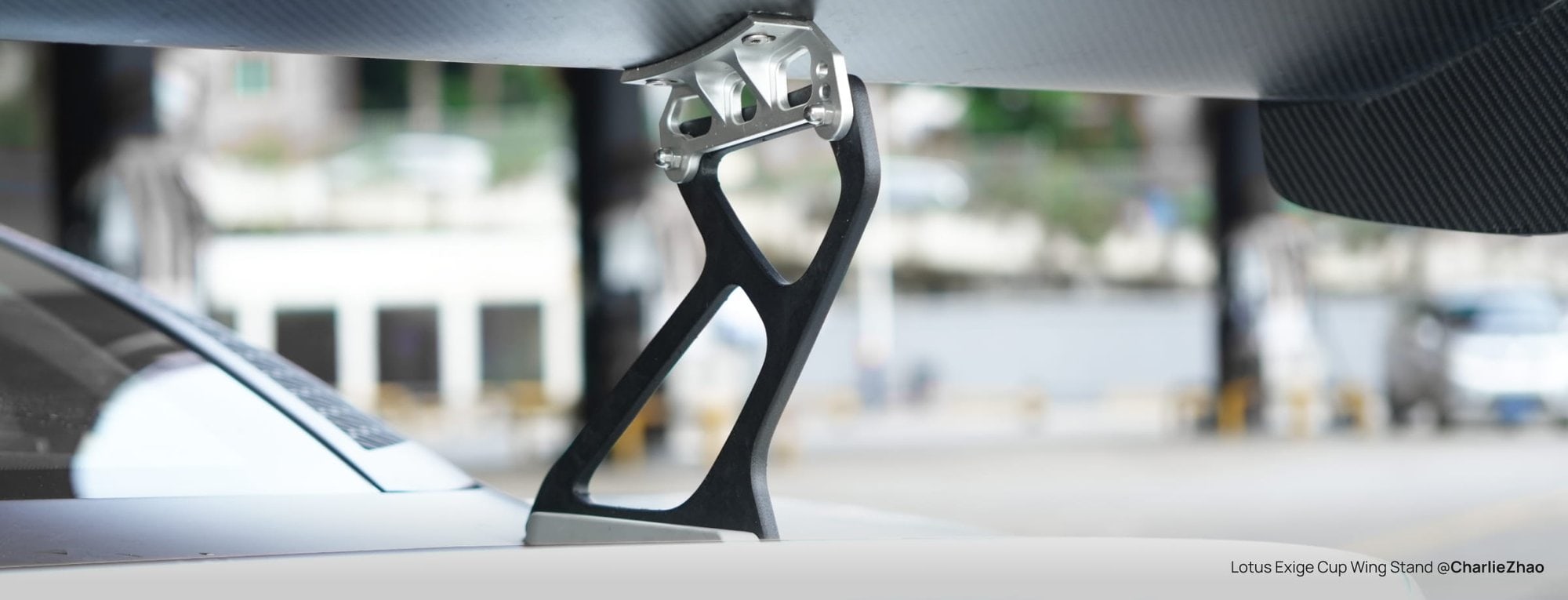
PPA-CF
The strongest and stiffest material we print. For brackets, jigs and parts that carry load.
- tensile strength, X-Y
- 168 MPa
- flexural modulus
- 9,860 MPa
- heat deflection, 1.8 MPa
- 196 °C
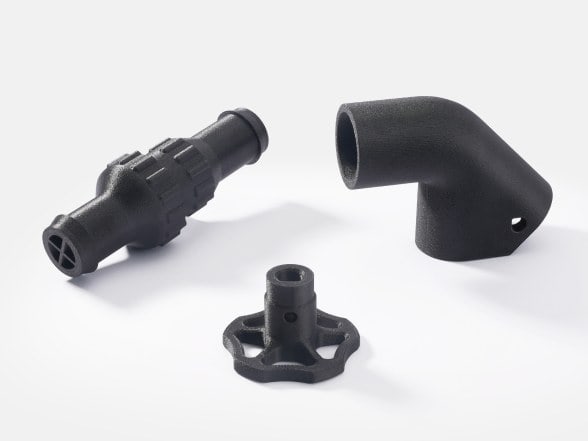
PPS-CF
The most heat- and chemical-resistant. For parts near heat, oils, fuels and solvents.
- tensile strength, X-Y
- 87 MPa
- flexural modulus
- 7,160 MPa
- heat deflection, 1.8 MPa
- 235 °C
Side by side
Manufacturer datasheet values for both. The better figure in each row is marked.
| Property | PPA-CF | PPS-CF |
|---|---|---|
| Tensile strength, along the layers (X-Y) | 168 ± 4 MPa(better) | 87 ± 5 MPa |
| Tensile strength, across the layers (Z) | 57 ± 5 MPa(better) | 24 ± 3 MPa |
| Flexural modulus (X-Y) | 9,860 ± 480 MPa(better) | 7,160 ± 280 MPa |
| Heat deflection at 1.8 MPa | 196 °C | 235 °C(better) |
| Water absorption at saturation | 1.30% | 0.05%(better) |
| Density | 1.25 g/cm³ | 1.26 g/cm³ |
Manufacturer datasheet values (Bambu Lab), measured on test specimens. A printed part also depends on its shape, walls and orientation.
Which one for your part
Choose PPA-CF if
- the part carries load or takes knocks
- it has to be as stiff as possible
- it is loaded across its layers too (57 MPa in Z against 24 MPa)
- the heat is moderate and 196 °C heat deflection is enough
Choose PPS-CF if
- it touches oils, fuels, solvents, acids or alkalis
- it runs hot: 235 °C heat deflection, the highest we print
- it must keep its size in wet places (0.05% water uptake against 1.30%)
- the load is moderate and runs along the layers
How we print carbon fibre
Carbon-fibre filaments are hard to print well, and they are among the materials we print most.
Dried first
Every spool is dried before it prints, so the layers bond and the part keeps its strength.
Hardened nozzle
Carbon fibre wears an ordinary nozzle out. Ours is hardened, so every part stays to size.
Heated chamber
A warm chamber holds the part at temperature, so it stays flat and bonded.
Oriented to the load
A part is strongest along its layers, so we turn each one to its load.
Largest part in one piece: 340 x 320 x 340 mm
PPA-CF or PPS-CF: questions
Which is stronger, PPA-CF or PPS-CF?
PPA-CF: 168 MPa tensile strength along the layers against 87 MPa, and 57 MPa against 24 MPa across them.
Which takes more heat?
PPS-CF: 235 °C heat deflection at 1.8 MPa against 196 °C. Both are specimen tests, not working limits.
Which one for fuel or chemicals?
PPS-CF. Its datasheet lists it as resistant to acids, alkalis, organic solvents, oil and grease. PPA-CF resists most solvents and oils, but not strong acids or alkalis.
Which costs more?
PPS-CF is usually the dearer of the two. Ask for both in your quote and we price each.
I am not sure which one I need
Send the part and what it has to survive. A person suggests the material along with the price.

Send the part, we suggest the material
Tell us the load, the heat and what it touches. A person replies with a material and a price.