PC FR: flame-retardant parts, printed to order
Flame-retardant polycarbonate for housings and covers. 108 °C heat deflection, 0.12% water uptake, usually 1-3 working days. From a single part.
- 108 °C heat deflection at 1.8 MPa (ISO 75)
- UL 94 V-0 (Bambu Lab's test of the filament)
- Usually 1-3 working days
- Up to 340 x 320 x 340 mm
What PC FR is for
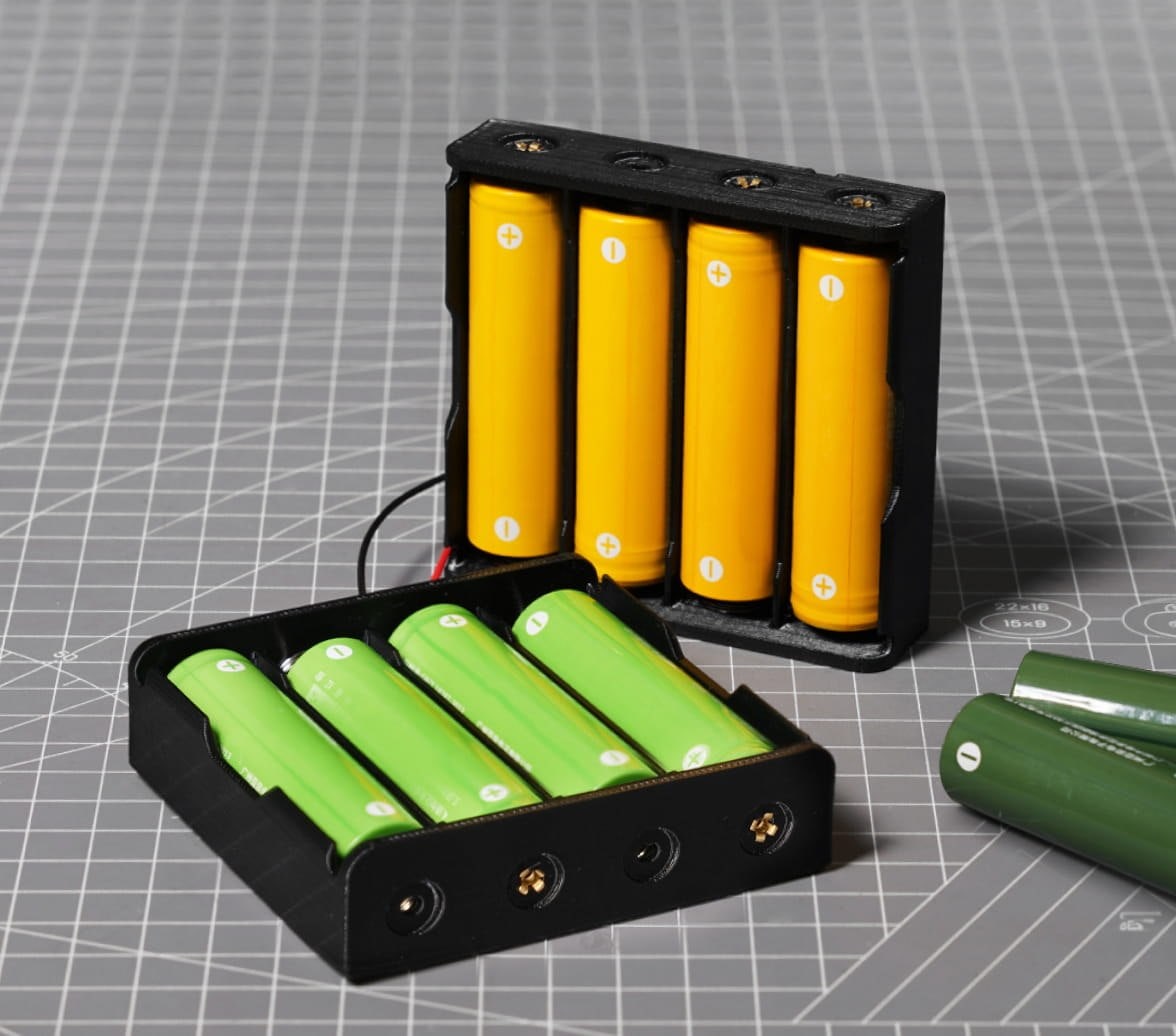
PC FR is polycarbonate with a flame retardant added. Bambu Lab sells it for industrial components and protective casings in electronics, automotive and manufacturing. In practice that means housings, covers and guards: the parts that sit around electronics or a motor and must not feed a fire.
It is the material we suggest when the brief says "flame retardant" and the part is a box, a lid or a shield. If the brief says "hot" or "chemicals" first, PC FR is probably the wrong pick. The sections below say where it stops.
The figures that decide it
Every figure below is from Bambu Lab's PC FR datasheet (V1.0), measured on test specimens. Bambu gives them "for design reference and comparison only".
| Property | Value | Test standard |
|---|---|---|
| Density | 1.18 g/cm³ | ISO 1183 |
| Heat deflection temperature | 108 °C at 1.8 MPa; 113 °C at 0.45 MPa | ISO 75 |
| Vicat softening temperature | 114 °C | ISO 306 |
| Saturated water absorption | 0.12% (25 °C, 55% RH) | Bambu Lab test |
| Tensile strength | 60 MPa along the layers (X-Y); 21 MPa across them (Z) | ISO 527 |
| Bending modulus | 1,890 MPa (X-Y); 1,660 MPa (Z) | ISO 178 |
| Impact strength | 55 kJ/m² (X-Y); 8.0 kJ/m² (Z) | ISO 179 |
| Elongation at break | 2.4% (X-Y); 1.5% (Z) | ISO 527 |
Water absorption has no standard named in the datasheet, only the conditions.
Read two rows together. Across the layers the part keeps about a third of its tensile strength (21 against 60 MPa) and about a seventh of its impact strength (8.0 against 55 kJ/m²). We orient the part so the load runs along the layers. Elongation at break is 2.4% along the layers, so a thin snap hook has little give; design it with a wide root or use a screw boss.
The water figure is the good news for electronics: 0.12% means a housing keeps its size in a damp room.
PC FR and UL 94 V‑0: what it covers
The UL 94 V-0 rating is Bambu Lab's test of the filament. The datasheet row itself reads "Flame retardant". A printed housing is not a certified part. It has its own wall thickness, infill and print settings, and nobody has tested it. If your product needs a flame rating on the finished enclosure, that test is yours to run on the printed part.
What it does not do
- Heat108 °C at 1.8 MPa is a test of a specimen under load, not a service temperature. PET-CF reaches 182 °C and PPS-CF 235 °C on the same test.
- ChemicalsThe datasheet says not resistant to acid, not resistant to alkali, not resistant to some organic solvents. It is resistant to most oil and grease. For anything stronger than oil, PPS-CF is the one to ask about.
- SunlightThe datasheet is silent on UV. For a part outdoors, ASA Aero's datasheet states UV resistance; PC FR's does not.
Print notes that change your design
Bambu lists "easy to warp" and "dry before use" as the two cons. Their guidance: enclosed chamber at 45-60 °C, filament dried at 80 °C for 8 hours, a brim, supports on. The datasheet gives a maximum overhang of about 70° and a maximum bridge of about 40 mm.
For you that means: long flat panels and sharp corners are where warping shows. Send the file and we say so before the price, not after the print. Largest part in one piece: 340 x 320 x 340 mm, the limit for heated-chamber materials.
PC FR, PETG HF or ASA Aero
All three are on our most popular list. Figures from each Bambu Lab datasheet.
| PC FR | PETG HF | ASA Aero | |
|---|---|---|---|
| Heat deflection, 1.8 MPa (ISO 75) | 108 °C | 62 °C | 78 °C |
| Impact X-Y / Z (ISO 179) | 55 / 8.0 kJ/m² | 31.5 / 10.6 kJ/m² | 32.0 / 3.4 kJ/m² |
| Water absorption, saturated | 0.12% | 0.40% | 0.80% |
| Flammability row | Flame retardant | Flammable | Flammable |
| UV in the datasheet | silent | silent | stated |
| Largest part | 340 x 320 x 340 mm | 360 x 360 x 360 mm | 340 x 320 x 340 mm |
Choose PC FR when flame is the requirement. Choose PETG HF (our 24/7 WHITE PETG) when it is not and the part stays cool: it is tougher across the layers (10.6 against 8.0 kJ/m²) and usually costs less. Choose ASA Aero when the box lives outside.
Largest part and lead time
PC FR is one of our most popular materials, so it usually prints in 1-3 working days on average after you approve the price. The quote gives the date for your part. One setup charge per order.
Questions
Is PC FR UL 94 V-0?
Bambu Lab's test of the filament gives V-0. A part printed from it is not a certified part, and we do not offer one as such.
What is the heat limit of a PC FR part?
The datasheet gives 108 °C heat deflection at 1.8 MPa (ISO 75). That is a specimen test, not a working limit. Tell us the temperature and the load and a person checks the part against them.
Does PC FR need drying?
Yes. Bambu Lab specifies 80 °C for 8 hours before printing. We handle that; you do not need to do anything.
Can you print PC FR in any colour?
Say the colour in your email and the quote answers it.
How big can a PC FR part be?
Up to 340 x 320 x 340 mm in one piece.
Why not print a housing in PETG?
PETG HF deflects at 62 °C and its datasheet row reads "Flammable". For a desk gadget it is fine. Where a flame rating is on the drawing, PC FR is the one to ask about.

A housing that has to resist flame?
Send the file and say where it goes. A person checks the material and replies with a price in 3 hours on average on workdays.