PETG HF or PET-CF for a stiff part
PET-CF where the part must stay stiff or sits near heat. PETG HF where it takes knocks across the layers, or where speed and price count. Here are the datasheet rows that decide it.
- Flexural modulus 2,050 against 5,320 MPa
- Heat deflection 62 °C against 182 °C
- PETG HF tougher across the layers
- Both: usually 1-3 working days
The short answer
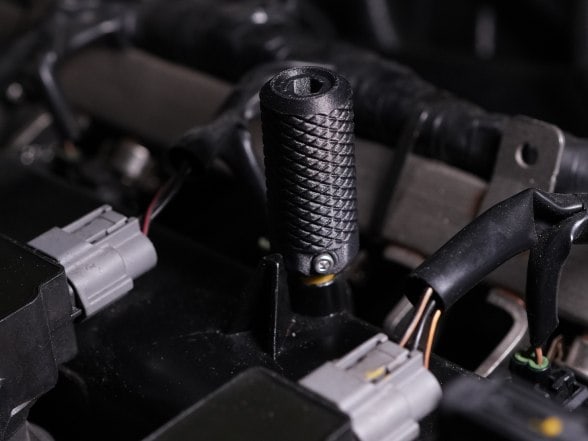
Choose PET-CF when the part must not bend or sits near heat: it is about two and a half times as stiff as PETG HF and deflects under load at 182 °C, against 62 °C. Choose PETG HF when the part takes knocks, the load runs across the layers, or speed and price count: 24/7 WHITE PETG is white PETG HF.
PET-CF pays for its stiffness across the layers: 4.5 kJ/m² impact strength there, against 10.6 for PETG HF.
The rows that differ
Figures from Bambu Lab's datasheets for PETG HF and PET-CF, measured on test specimens, "for design reference and comparison only".
| PETG HF | PET-CF | |
|---|---|---|
| Flexural modulus X-Y (ISO 178) | 2,050 MPa | 5,320 MPa |
| Tensile strength X-Y (ISO 527) | 34 MPa | 74 MPa |
| Heat deflection, 1.8 MPa (ISO 75) | 62 °C | 182 °C |
| Saturated water absorption | 0.40% | 0.37% |
| Impact strength Z (ISO 179) | 10.6 kJ/m² | 4.5 kJ/m² |
Water absorption is measured at 25 °C and 55% RH; both take up little, so damp air is no reason to pick one over the other. Neither resists acids or alkalis by its datasheet; both resist most oils and grease.
What stiffness buys you
A bracket that holds a sensor, a camera or a guide has to stay where it is put. In the same shape and under the same load, a stiffer material bends less, so PET-CF holds a position that PETG HF lets drift.
Heat counts too. PETG HF has 62 °C heat deflection to work with, and beside a motor, a lamp or in a warm cabinet that runs out. PET-CF holds to 182 °C. HDT is a specimen test, not a service temperature: tell us the load and where the part sits.
Choose PETG HF when
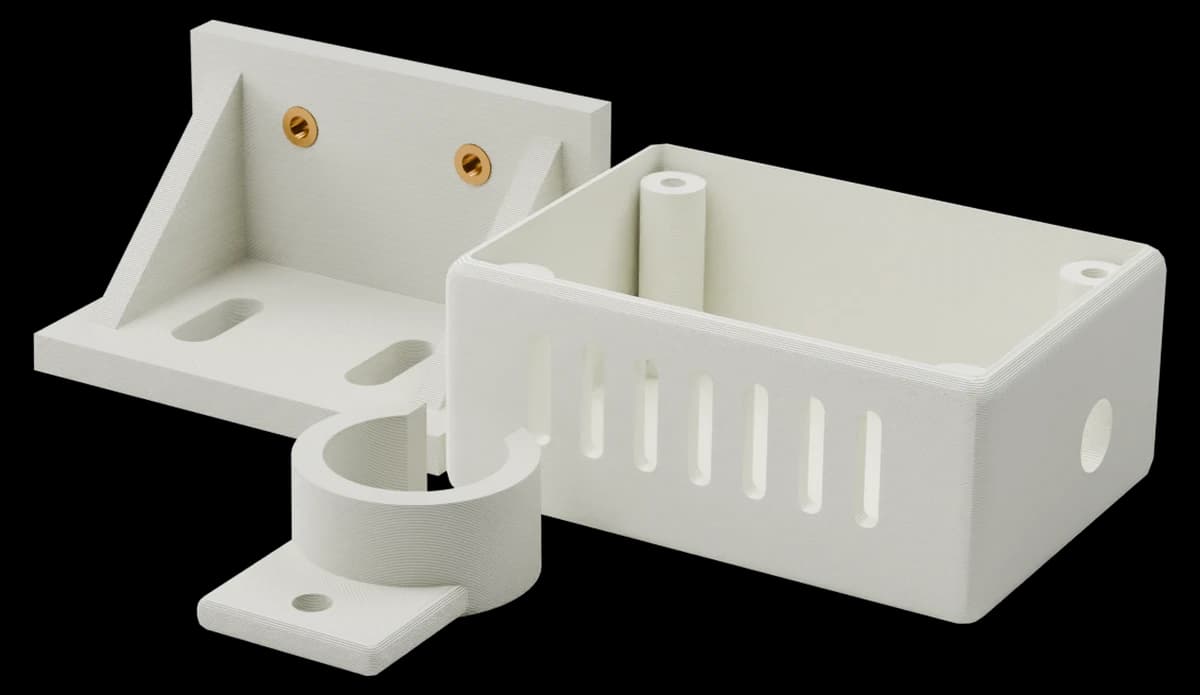
- the part takes knocks or the load runs across the layers: 10.6 against 4.5 kJ/m² impact strength across them
- it sits away from heat, well below its 62 °C heat deflection
- you want it fast: 24/7 WHITE PETG is white only, so there is no colour change to wait for or pay for
- the part is large: PETG HF prints up to 360 x 360 x 360 mm in one piece
PETG HF usually costs less. The quote shows the price of each for your part.
Choose PET-CF when
- the part must not flex: 5,320 against 2,050 MPa flexural modulus
- it carries load: 74 against 34 MPa tensile strength along the layers
- it sits near heat, up to 182 °C heat deflection
PET-CF is abrasive and needs a heated chamber, so the largest part is 340 x 320 x 340 mm.
Speed and price
Both are among our most popular materials: 1-3 working days on average after you approve the price. 24/7 WHITE PETG has no setup to wait for or pay for; PET-CF carries the usual setup charge, as PETG in any other colour does. The quote gives the price and the date for your part.
Questions
Is PET-CF stronger than PETG?
Along the layers, yes: 74 against 34 MPa tensile strength and 5,320 against 2,050 MPa flexural modulus. Across the layers PETG HF is tougher in impact (10.6 against 4.5 kJ/m²).
Which handles heat better?
PET-CF: 182 °C heat deflection at 1.8 MPa, against 62 °C for PETG HF (ISO 75).
Is either one chemical resistant?
Not to acids or alkalis: both datasheets say not resistant. Both resist most oils and grease. For chemicals, ask about PPS-CF.
Which is cheaper?
PETG HF usually, and 24/7 WHITE PETG carries no setup to wait for or pay for. The quote shows the price of each for your part.
How big can the part be?
360 x 360 x 360 mm in PETG HF; 340 x 320 x 340 mm in PET-CF.

Does the part need to stay stiff?
Send the file and say what load and heat it sees. A person picks PETG HF or PET-CF and replies with a price in 3 hours on average on workdays.