Carbon fibre print instead of a metal part: the stiffness gap, in datasheet figures
Sometimes it works. On Bambu Lab's datasheets PPA-CF has about a sixth of 6061-T6 aluminium's stiffness along the layers and a sixteenth across them, so the printed part comes out thicker, lighter and oriented to its load. We make no metal parts; this page says when a print does the job and when it does not.
- PPA-CF 11,800 MPa tensile modulus along the layers; 6061-T6 about 69,000
- PPA-CF 1.25 g/cm³; aluminium 2.7, brass 8.2
- PPA-CF and PPS-CF 2-5 working days after payment
- Up to 340 x 320 x 340 mm; we make no metal parts
Can a carbon fibre print replace a metal part?
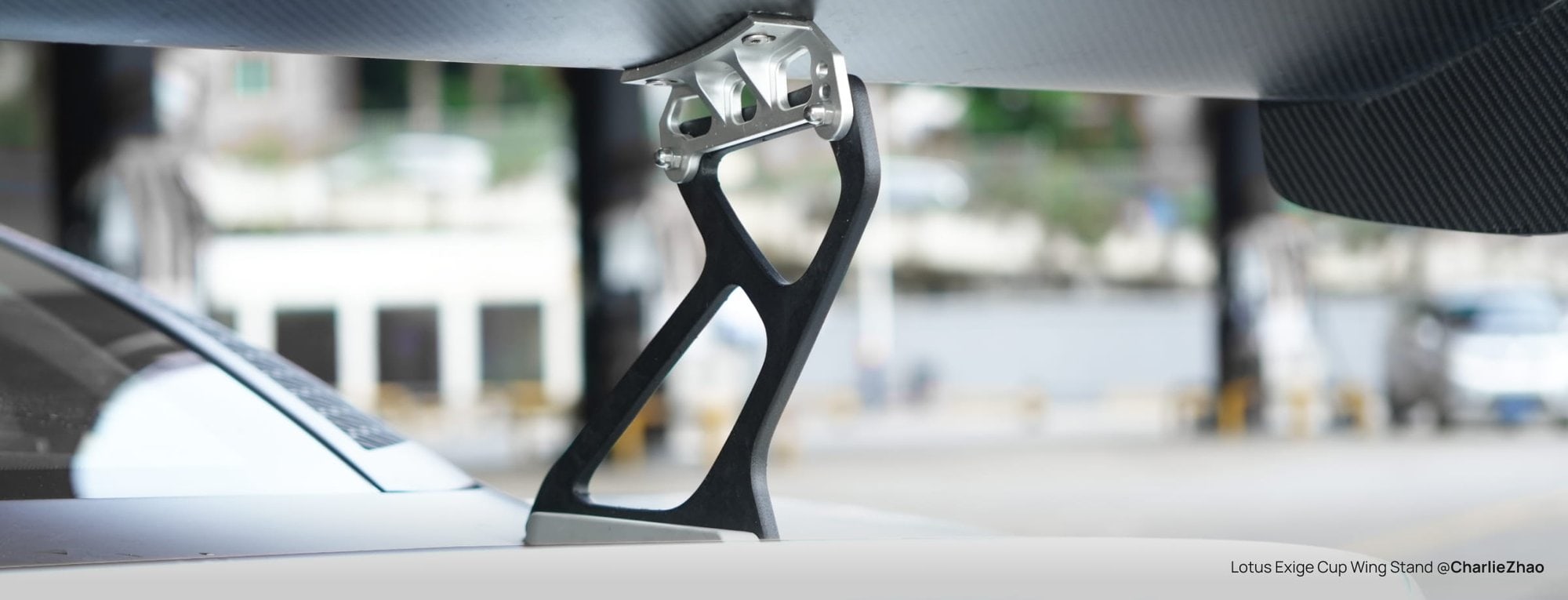
Yes, when the part is limited by its shape, its weight or corrosion rather than by stiffness, and its load runs along the layers: jigs, fixtures, light brackets, covers, spacers, guides, a first copy to check fit. These print well in PPA-CF or PPS-CF, both among our most popular materials.
Keep it metal when the part is thin and sized for stiffness, must bend before it breaks, carries a fine loaded thread, or is a safety part. We make no metal parts.
The figures side by side
The gap is stiffness, and it is large. PPA-CF, the stiffer of our two, has a tensile modulus of 11,800 MPa along the layers against about 69,000 MPa for 6061-T6 aluminium: a sixth. Across the layers it is 4,300 MPa: a sixteenth. A printed part that must match a metal part's stiffness gets thicker, about 1.9 times for a flat PPA-CF plate, and still weighs about 90% of the aluminium one.
PPA-CF and PPS-CF figures are from Bambu Lab's datasheets (both TDS V1.0), measured on printed specimens and given "for design reference and comparison only". X-Y is along the layers, Z across them. The aluminium and brass figures are typical values from MakeItFrom.com for 6061-T6 aluminium and UNS C36000 (CW603N) free-cutting brass, fetched 15 October 2026; the brass ranges span three tempers. A metal has the same figure in every direction, so it gets one value.
| PPA-CF | PPS-CF | Aluminium 6061-T6 | Brass C36000 | |
|---|---|---|---|---|
| Our status | PPA-CFmost popular | PPS-CFmost popular | Aluminium 6061-T6we make no metal parts | Brass C36000we make no metal parts |
| Tensile modulus (stiffness), X-Y / Z (ISO 527) | PPA-CF11,800 / 4,300 MPa | PPS-CF8,230 / 2,850 MPa | Aluminium 6061-T669,000 MPa | Brass C36000100,000 MPa |
| Tensile strength, X-Y / Z (ISO 527) | PPA-CF168 / 57 MPa | PPS-CF87 / 24 MPa | Aluminium 6061-T6310 MPa (yield 270) | Brass C36000330-530 MPa (yield 140-260) |
| Elongation at break, X-Y / Z (ISO 527) | PPA-CF3.2 / 0.9% | PPS-CF1.2 / 0.7% | Aluminium 6061-T610% | Brass C360005.8-23% |
| Density (ISO 1183) | PPA-CF1.25 g/cm³ | PPS-CF1.26 g/cm³ | Aluminium 6061-T62.7 g/cm³ | Brass C360008.2 g/cm³ |
Two datasheet notes change how to read the plastic columns. The PPA-CF and PPS-CF specimens were printed in a 52 °C and a 60 °C chamber and not annealed; Bambu Lab adds that a hotter chamber "would" give higher figures, "especially the Z- direction's". We publish the figures as printed and do not extrapolate. And the figures are specimen tests: your part depends on its geometry, its orientation and the settings.
Not in the table: heat deflection, because it is a plastics test with no metal figure beside it. PPA-CF reaches 196 °C and PPS-CF 235 °C at 1.8 MPa (ISO 75). Those rows are under Weight, chemicals, flame and heat, below.
What the gap means for your part
Stiffness first, because it is the largest gap. Along the layers PPA-CF has 17% of the aluminium's modulus and 12% of the brass's; across the layers 6% and 4%. PPS-CF: 12% of the aluminium along the layers, 4% across. A bracket that was sized so the aluminium barely flexes will flex about seven times as much in PPA-CF at the same thickness, and about twenty times if the load crosses the layers: in bending, the PPA-CF datasheet gives 9,860 MPa along the layers and 3,240 MPa across them (ISO 178).
Strength second. PPA-CF reaches 54% of the aluminium's tensile strength along the layers (168 against 310 MPa) and 18% across them (57 MPa). PPS-CF reaches 28% (87 MPa). So orientation is not a detail: a part loaded across its layers keeps a third of the strength it has along them. Say which way the load runs when you send the file.
How it breaks is the third difference. PPA-CF stretches 3.2% before it breaks along the layers and 0.9% across them; the aluminium stretches 10% and the brass 5.8-23%. A metal part bends, shows it and keeps holding. A carbon fibre print breaks with little warning. A part whose failure must be visible before it is final belongs in metal.
The thickness lever is the one figure that makes a printed copy possible. A flat plate's bending stiffness goes with its modulus times its thickness cubed. Printed flat, a plate bends along its layers, so use PPA-CF's bending modulus, 9,860 MPa (ISO 178). To match a 6061-T6 plate the PPA-CF plate is about 1.9 times as thick (the cube root of 69,000 / 9,860) and weighs about 90% as much. Against the brass it is about 2.2 times as thick at about a third of the weight. In PPS-CF, about 2.1 times as thick as the aluminium at about the same weight. Those are plain plates loaded along their layers; a real bracket gets ribs, and a person designs them. The ratio says the part grows, not by exactly how much.
Weight, chemicals, flame and heat
- WeightPPA-CF is 1.25 g/cm³ against 2.7 for the aluminium and 8.2 for the brass: 46% and 15% of the density. A same-size copy of a brass part weighs about a seventh as much. Even after the thickness lever, the PPA-CF copy of an aluminium plate is lighter.
- Chemicals, in PPS-CFPPS-CF's datasheet reads "Resistant" to acid, alkali, organic solvent and oil and grease, and its Basic Info says "excellent resistance to solvents, corrosion, heat, and flames". That is what PPS-CF resists; we make no claim about how either metal corrodes. For the full row set, see Chemical and oil resistant 3D printing filament.
- Flame, in PPS-CFThe flammability row reads "Self-extinguishing when away from fire; flame-retardant". PPA-CF's row reads "Flammable".
- Heat, for a plasticHeat deflection at 1.8 MPa: PPS-CF 235 °C, PPA-CF 196 °C (ISO 75). That is a loaded-specimen test, not a service temperature, and there is no metal figure to put beside it. It says a part near a motor or a heater is not ruled out by heat alone.
PPA-CF or PPS-CF for the job
For a metal replacement, PPA-CF is the default: stiffer (11,800 against 8,230 MPa), stronger (168 against 87 MPa) and more than twice as strong across the layers (57 against 24 MPa). PPS-CF takes over when the part also meets solvents or more heat: 235 °C against 196 °C heat deflection, "Resistant" on every chemical row, 0.05% saturated water absorption against PPA-CF's 1.30%. The two are compared row by row on PPA-CF or PPS-CF.
Both are among our most popular materials, usually 2-5 working days after payment. Both print in a heated chamber with a hardened nozzle, so the largest part in one piece is 340 x 320 x 340 mm.
Threads and holes
A buyer once asked for threaded parts that are normally made of brass, in PPA-CF or a similar high-strength plastic; the order went ahead in PPA-CF. The catch with such parts is the thread. Fine threads do not print well in a carbon fibre filament, so the hole is printed plain and the thread is cut afterwards.
So draw the hole plain and name the thread it takes in the enquiry.
Keep it metal when
- The part is thin and was sized for stiffness. A sixth of the modulus does not come back without making it thicker, and sometimes there is no room.
- It must bend before it breaks. 0.9% elongation across the layers is a brittle failure; a safety-relevant part that must deform visibly first stays in metal.
- It is a load-bearing safety part. We print none of those, in any material.
- It carries a fine thread under load, or a fit tighter than ±0.5% (minimum ±0.5 mm).
- It sits under constant load for months. The datasheets publish no creep or long-term figure for either material, so we cannot promise one.
- It is a metal part, full stop. A tender for about fifty structural metal parts once reached us; it went no further. A machine shop or a metal printing service makes those. We do not make, arrange or broker metal parts.
How we print it
- PPA-CF and PPS-CF are among our most popular materials: usually 2-5 working days after payment. Ask for both in one request and the quote prices each.
- Largest part in one piece: 340 x 320 x 340 mm, the limit for heated-chamber materials.
- We choose the print orientation, so say which way the load runs; the figures above show why.
- Tolerance ±0.5%, minimum ±0.5 mm. Posted to the Baltics, Finland, Sweden and Denmark. Reply in 3 hours on average on workdays.
- We print chopped carbon fibre filament. Continuous-fibre printing is a different process with different figures, and we do not offer it.
Questions
Checked by the druckworks workshopUpdated
Is PPA-CF stronger than aluminium?
No. It is weaker in every direction: on Bambu Lab's datasheet PPA-CF reaches 168 MPa tensile strength along the layers and 57 MPa across them; typical 6061-T6 aluminium is 310 MPa in every direction. Stiffness is further apart: 11,800 against about 69,000 MPa.
Can a printed part replace a brass part?
When the brass was chosen for shape, corrosion or ease of machining rather than stiffness, it can. PPA-CF has about an eighth of C36000 brass's stiffness along the layers and weighs about a seventh as much. A fine loaded thread is the usual reason it cannot; see Threads and holes.
How much lighter is the printed part?
At the same size, a PPA-CF part is 46% of the weight of the aluminium one and 15% of the brass one (1.25 against 2.7 and 8.2 g/cm³). Matched for bending stiffness it grows thicker: about 90% of the aluminium plate's weight, about a third of the brass plate's.
Can you print a thread like the brass one?
Not a fine one: fine threads do not print well in carbon fibre filament. We print the hole plain and the thread is cut afterwards.
Do you make metal parts?
No. We print FDM plastics only and do not arrange or broker metal, machined or metal-printed parts. A machine shop is the right address for those.
PPA-CF or PPS-CF?
PPA-CF for stiffness and strength: 11,800 MPa and 168 MPa along the layers. PPS-CF when the part also meets solvents or more heat: "Resistant" on every chemical row and 235 °C heat deflection at 1.8 MPa.
How big can the part be?
Up to 340 x 320 x 340 mm in one piece, in PPA-CF or PPS-CF.

Send the drawing of the metal part
Send the file and say what load the part carries and which way it runs. A person checks PPA-CF and PPS-CF against it, says if it should stay metal, and replies with a price in 3 hours on average on workdays.