Carbon fibre 3D printing: three materials, three jobs
Carbon-fibre filament makes stiff parts that keep their size, so a thinner part can do the work of a heavier one. We print three of them: PPA-CF, PPS-CF and PET-CF. Figures from Bambu Lab's datasheets, from a single part.
- Up to 168 MPa tensile strength along the layers (ISO 527)
- Up to 235 °C heat deflection at 1.8 MPa (ISO 75)
- Usually 1-3 working days
- Up to 340 x 320 x 340 mm
What carbon-fibre filament is
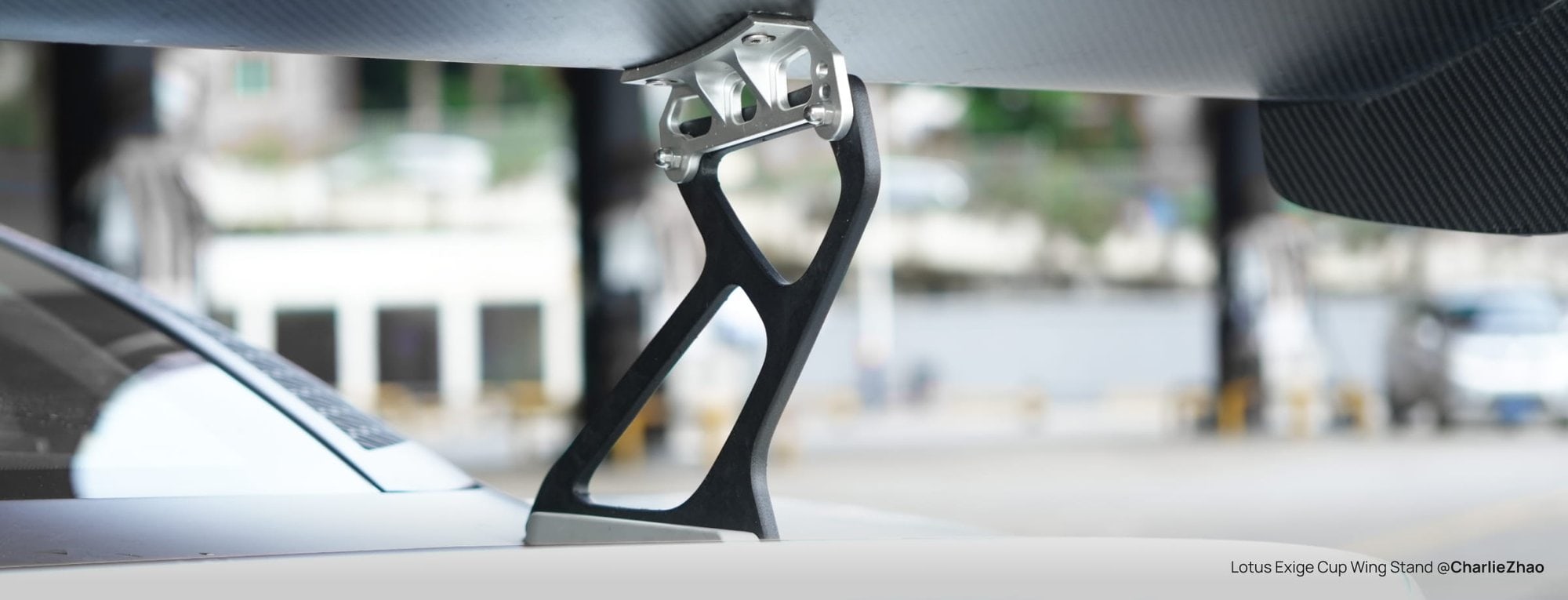
PPA-CF, PPS-CF and PET-CF are a base plastic (PPA, a semi-aromatic nylon; PPS; or PET) filled with chopped carbon fibre. The fibre does three things. It makes the part stiffer than the unfilled plastic, it keeps the part's size from drifting with temperature and moisture, and it lets a thin, light part do the work of a heavier one. The density of all three is 1.25 to 1.29 g/cm³ (ISO 1183). The surface comes out matte black.
The limit is the way FDM builds a part. The fibre lies along the printed lines, so a part is strong along the layers and weaker across them. Tensile strength across the layers (Z) is about a third of the value along them (X-Y) for PPA-CF, 28% for PPS-CF and 47% for PET-CF. We orient the part so the load runs along the layers. If a part must carry load across them, tell us and a person looks at the design before the price.
The three side by side
Every figure is from Bambu Lab's datasheet for that filament, measured on test specimens. Bambu gives them "for design reference and comparison only".
| PPA-CF | PPS-CF | PET-CF | |
|---|---|---|---|
| Tensile strength, X-Y / Z (ISO 527) | 168 / 57 MPa | 87 / 24 MPa | 74 / 35 MPa |
| Bending modulus, X-Y / Z (ISO 178) | 9,860 / 3,240 MPa | 7,160 / 2,460 MPa | 5,320 / 2,210 MPa |
| Heat deflection at 1.8 MPa (ISO 75) | 196 °C | 235 °C | 182 °C |
| Density (ISO 1183) | 1.25 g/cm³ | 1.26 g/cm³ | 1.29 g/cm³ |
| Saturated water absorption (25 °C, 55% RH) | 1.30% | 0.05% | 0.37% |
Two notes on reading the table. The water row has no standard in the datasheets, only the conditions. And the specimens were not all conditioned the same way: PPA-CF and PPS-CF were tested as printed and not annealed, while the PET-CF specimens were annealed and dried at 80 °C for 12 hours before testing. Heat deflection is a specimen test under load, not a working temperature.
Which one for which job
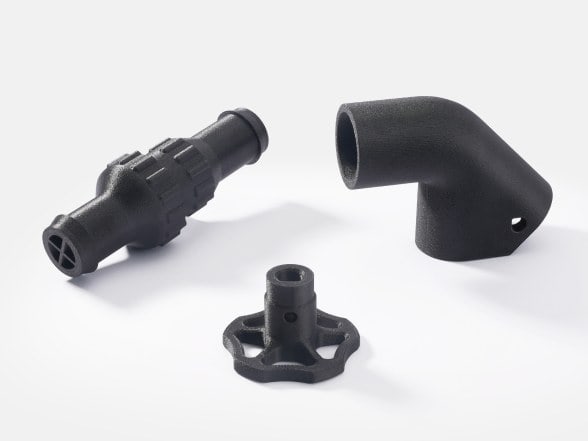
- PPA-CFFor the stiffest, strongest part: brackets, jigs, gears and housings that carry load. It has the highest tensile strength and bending modulus of the three, and the most water uptake, so a part can change size slightly in a damp room.
- PPS-CFFor heat and chemicals: parts near engines, heaters and process lines. Bambu Lab's datasheet lists it as resistant to acids, alkalis, organic solvents, oil and grease, and its water uptake is 0.05%. It is the weakest of the three across the layers (24 MPa in Z) and has the lowest impact figure, so it is not the pick for a part that takes knocks.
- PET-CFFor a stiff part near moderate heat that need not be the strongest: fixtures, motor mounts, housings. It keeps the largest share of its strength across the layers (35 of 74 MPa), takes up little water, and is the one to ask about when the budget matters. Its datasheet says it is not resistant to acids and alkalis.
Head to head: PPA-CF against PPS-CF has its own page, PPA-CF or PPS-CF. For a flame rating, see PC FR: UL 94 V-0 is Bambu Lab's test of that filament. PPS-CF's datasheet calls it self-extinguishing but gives no UL class.
How we print them
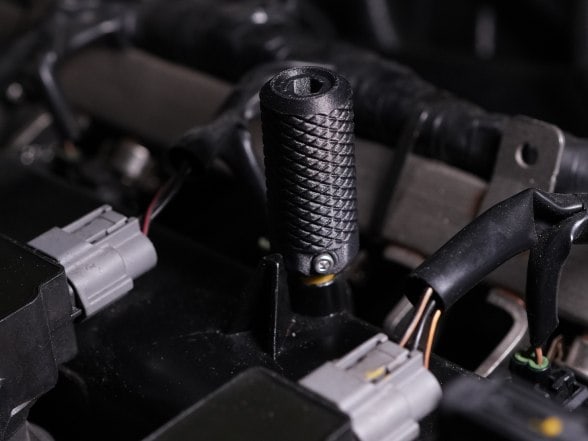
All three are among our most popular materials, so they usually print in 1-3 working days on average after you approve the price. The quote gives the date for your part.
- Largest carbon-fibre part in one piece: 340 x 320 x 340 mm.
- Tolerance ±0.5%, minimum ±0.5 mm.
- We dry the carbon-fibre filament before printing, as Bambu Lab's datasheets specify for all three.
- A person checks every file before the price, and says so when carbon fibre is the wrong choice for the part.
- Reply in 3 hours on average on workdays. From a single part, nothing to pay until you approve.
What we do not claim
Printed parts carry no formal approval: no datasheet figure is a guarantee for your part, and we do not offer parts approved to a standard. Real parts depend on the geometry, the orientation and the print settings. Tell us the load, the temperature and what the part touches, and a person checks the material against them. Other makers print these materials too; what we offer is the three named, with the figures and the limits, and a person who answers.
Questions
Is carbon-fibre 3D printing stronger than metal?
No. PPA-CF reaches 168 MPa tensile strength along the layers and about a third of that across them (ISO 527). It can replace metal in a bracket or a jig, not in every part. Send the load and we say.
Which carbon-fibre filament takes the most heat?
PPS-CF: 235 °C heat deflection at 1.8 MPa (ISO 75), against 196 °C for PPA-CF and 182 °C for PET-CF. These are specimen tests, not working limits.
Which one resists chemicals?
PPS-CF. For the detail, see the chemical-resistant filament guide. PET-CF is not resistant to acids and alkalis.
Which one is the cheapest?
PET-CF, usually. Ask for two materials in one request and the quote prices each.
Is a carbon-fibre part really weaker across the layers?
Yes. FDM parts are weaker across the layers in every material. For these three, the Z tensile figure is 28% to 47% of the X-Y figure. We orient the part to its load.
How big can a carbon-fibre part be?
Up to 340 x 320 x 340 mm in one piece.

A stiff part that has to hold its size?
Send the file and say what it has to carry or survive. A person checks the material and replies with a price in 3 hours on average on workdays.